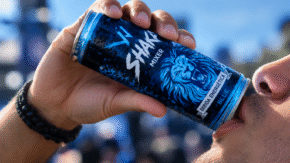
Shaka: the other side of energy drinks
No one would have pictured that young woman in an Intensive Care Unit when the party began.
Like so many young people, she had likely gone there seeking a few hours of fun—the kind that lets you briefly forget the heat, daily worries, and even those long nights when getting a good night’s sleep can feel like a luxury.
At some point, she consumed Shaka.
Shortly thereafter, that decision took on a far more serious dimension.
When her friends realized something was seriously wrong, they rushed her to the Camilo Cienfuegos Provincial Hospital in Sancti Spíritus. She arrived virtually comatose, according to Yaneisy Valdés Gutiérrez, the facility’s acting director and a toxicology specialist. “The medical team had to resort to mechanical ventilation and keep her under observation for 24 hours,” she explains.
The scene, reconstructed from medical accounts, bears little resemblance to the usual image associated with a drink that circulates among young people as a quick fix for staying awake and fighting off fatigue.
There was no energy there.
There was a struggle to restore the vital functions of a patient whose life had been endangered by intoxication.
The good news arrived hours later. By midday, the doctors found her conscious and oriented, able to answer the questions that helped clarify what had happened when she drank the beverage.
But that young woman was not an isolated case.
So far in August, five young people aged 18 to 22 have been treated at Camilo Cienfuegos Hospital for intoxication linked to the consumption of Shaka, according to the specialist.
Four exhibited mild symptoms—headache, vomiting, lethargy, sweating, and tachycardia—that resolved after about four hours of observation in the emergency department.
The fifth was the young woman whose life was in danger and who required mechanical ventilation.
Five cases in a single month compel us to look beyond each individual story.
They point to a practice gaining ground among young people in Sancti Spíritus, precisely as the drink begins to trend across various parts of the country.
The first inquiries seeking information about Shaka reached provincial experts in June. At that time, they were sporadic. These calls increased during July, and according to the toxicologist, the sharpest rise in consumption has been observed in August—a period that also coincides with various local festivities and popular events.
THE PROMISE OF AN ENERGY BOOST
Shaka captured the imagination of many young people with a simple promise: to help them stay awake, fight off fatigue, and quickly regain a sense of energy.
Valdés Gutiérrez explains that this perception is one of the factors that have helped the product become a trend.
“Caffeine, one of the drink’s ingredients, is a central nervous system stimulant that can initially produce a feeling of satisfaction, stimulation, and energy. This response can lead the consumer to believe that their fatigue has vanished; however, excessive consumption—or use by someone unaccustomed to caffeine—can actually exacerbate fatigue, drowsiness, or insomnia, among other symptoms,” he explains.
This distinction is crucial when the consumers are adolescents or young adults who stay awake for extended periods to study, socialize, have fun, or engage in nightlife activities.
The stimulation can thus become a way to put off the signals the body is sending. And when the sensation of fatigue fades, the temptation to consume more arises easily.
WHAT’S REALLY INSIDE THE CAN
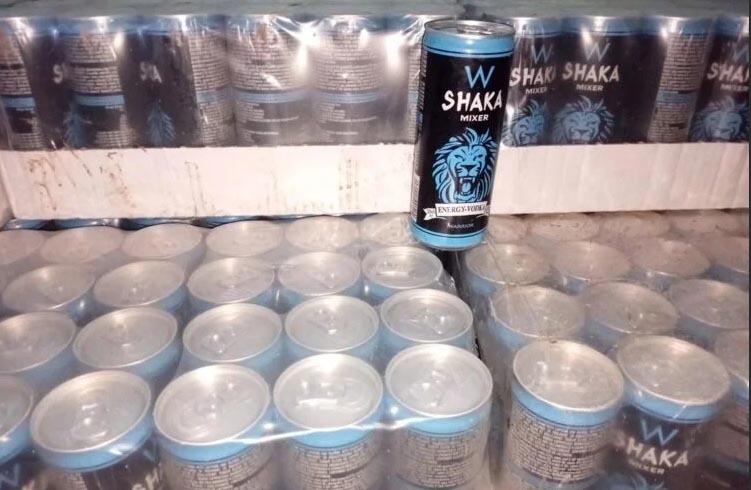
One of the Shaka versions available in Cuba is sold in 250-milliliter cans. Marketed as “Shaka Mixer Energy-Vodka,” the product comes in versions with 18% and 22% alcohol by volume. The formula combines vodka with an energy drink.
Shaka is not merely a drink associated with caffeine and a boost of energy. Some of its varieties are, technically speaking, mixed alcoholic beverages that incorporate ingredients typical of energy drinks.
This combination warrants special attention. While caffeine acts as a central nervous system stimulant, alcohol has a depressant effect. The body thus receives substances with opposing effects, and consumers may struggle to accurately gauge their own level of intoxication.
The various versions also feature flavors that can mask the characteristic taste of alcohol. The product line includes combinations such as vodka-energy, whisky-cola, mojito, and coconut-pineapple.
The can may look small. The problem inside is not.
INTOXICATION DOESN’T ALWAYS LOOK LIKE INTOXICATION.
The specialist describes an initial stage characterized by satisfaction, stimulation, and euphoria, but explains that as consumption continues, symptoms such as irritability, agitation, profuse sweating, tachycardia, elevated blood pressure, headaches, memory impairment, and significant behavioral changes may emerge.
In severe cases, loss of consciousness can occur. Meanwhile, the body accumulates the effects of the ingested substances.
Abdominal pain, vomiting, and extreme lethargy may set in, potentially leading to a loss of consciousness. “The problem is that, amidst youth social activities, those with the affected person do not always realize they are facing a medical emergency,” the doctor explains.
That is where another part of the story—one rarely told—begins.
Fear. Shame. Silence.
The specialist explains that when a peer suffers from intoxication, some young people leave out of fear or abandon the affected individual without help, while others arrive at medical facilities without disclosing exactly what was consumed or what it was mixed with.
This omission can complicate medical assessment and delay the identification of the substance causing the symptoms. For this reason, one of Valdés Gutiérrez’s most insistent recommendations is also one of the simplest: Tell the truth.
What was consumed? How much? Where? How? What was it mixed with? And how much time elapsed before symptoms appeared?
It is not about judging the patient; it is about saving him.
THREE CANS, BEER, AND A BROKEN DOOR
While the young woman who ended up in intensive care represents the most severe aspect of this story, another case treated in August illustrates the extremes to which consumption-related behavioral changes can escalate.
The young man had consumed three cans of Shaka and had also mixed the drink with beer and other alcohol. Upon arrival at the hospital, he was suffering from moderate-to-severe intoxication, exhibiting such pronounced agitation and euphoria that managing him proved difficult.
She had to be restrained to her bed and sedated to bring the situation under control. Although she did not attack the medical staff, she did break a door inside the hospital. After approximately six hours of observation, her symptoms improved, and she was no longer in a life-threatening condition.
Three cans. Beer. More alcohol. And a broken door. Sometimes, a medical record can also tell the story of what happens when a drink ceases to be perceived merely as a drink and begins to turn into a risk.
THE CONTEXT PLAYS A PART, TOO
High temperatures encourage the rapid consumption of cold, carbonated drinks. Late-night hours prolong activities. Peer pressure does the rest.
And price is a factor, too.
The specialist places the cost of the drink between 450 and 550 Cuban pesos, noting that it can be appealing to young people when compared to the price of a beer.
That completes the cycle: a relatively affordable drink with flavors that can mask the taste of alcohol; one associated in the minds of young people with energy and stamina; and one consumed in settings where the night seems to demand precisely that—staying awake.
What is often left out of the conversation is the alcohol content. One version of Shaka Mixer contains 18 percent alcohol, while another reaches 22 percent.
The beer that many young people use as a benchmark typically hovers around five percent. The difference is significant.
CUBA IS NOT ALONE IN FACING THIS CONCERN
The situation currently unfolding in Sancti Spíritus is part of a broader health concern shared by other countries.
In July 2026, the English government announced a ban on the sale of high-caffeine energy drinks to anyone under the age of 16. The measure—scheduled to take effect on April 6, 2027, subject to parliamentary approval—will apply to retail outlets, vending machines, and online sales. The regulation will cover beverages (excluding tea and coffee) containing more than 150 milligrams of caffeine per liter.
This decision follows a public consultation conducted by British authorities and addresses concerns regarding the regular consumption of these drinks among children and adolescents. According to the government, approximately 100,000 minors in England consume high-caffeine energy drinks on a daily basis.
Consequently, the international debate is no longer limited to the quantity consumed by adolescents. It also raises questions about the responsibilities of the market, retailers, families, and institutions when products containing stimulants become part of minors’ daily lives.
In Cuba, the concern takes on a new dimension because some versions of Shaka circulating on the market specifically combine stimulants with alcohol.
The specialist from Sancti Spíritus believes that Shaka should be subject to the same regulations as other alcoholic beverages and urges sellers to refrain from selling it to anyone under the age of 18.
Perhaps the real problem doesn’t lie in the can itself. It lies in everything that happens before it is opened: the advertising, the trends, peer pressure, a lack of awareness, and the ease of purchase.
And, above all, it lies in the notion that something promising to provide energy couldn’t possibly end up draining it from us.