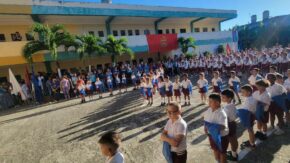
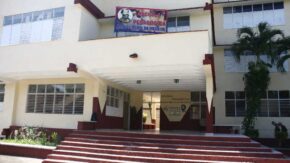
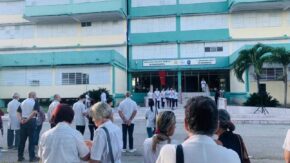
How do students from a special education school in Sancti Spíritus escape the encirclement?
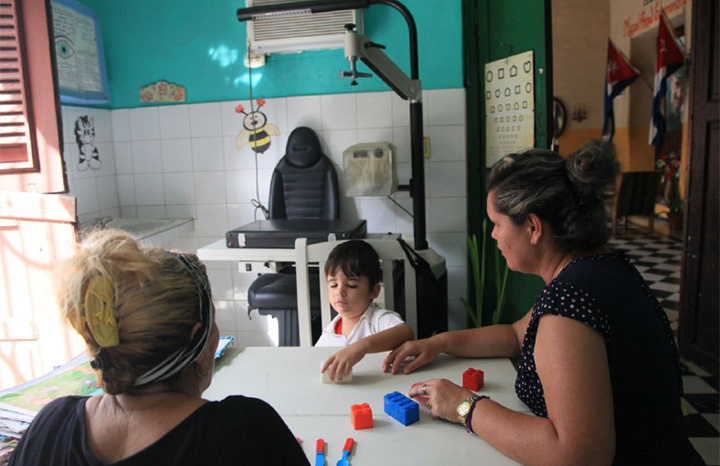
When Darío looks up and says, “Great!”, the eyes of the teaching assistant for the “Second 3” class and those of Anabel Viamontes—director of the Miguel Ángel Echemendía Ramírez institution in this city—light up with an unusual sparkle; Darío is a special-needs child, just like the other 70 students at a center whose wings and hope remain unbroken, even by the harshest economic blockade.
“Vencedores” (Victors) is the name of the classroom the little boy shares with Daibel and Lían. “They have been with us since preschool; they started in the language class,” Viamontes noted. “When their more complex educational needs were identified, the standard procedure would have been to send them to the Psychopedagogical Medical Center or keep them at home with their families; however, thanks to close collaboration between parents and the education system, this space was created.”
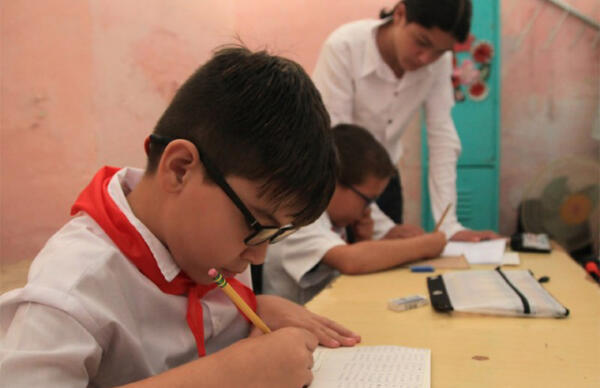
Every word spoken or skill acquired by the students represents a triumph for the school, which serves children from Sancti Spíritus province who are blind or have low vision, strabismus, or amblyopia, as well as those with speech and language disorders or intellectual disabilities; daily life here serves as a powerful testament to the importance placed on childhood in Cuba.
Viamontes, who has been at the school for 32 years—several of them leading the staff—highlighted to the ACN the difficulties caused by the policy imposed by the United States for a facility accommodating boarding, day, and semi-boarding students: shortages of electricity and equipment (such as adjustable desks), as well as fuel issues affecting transportation and food supplies. Every day is a challenge, she noted.
“If any place is affected by the U.S. blockade, it is special education schools,” remarked Iraida Díaz—a current fourth-grade teacher and former principal whom retirement could barely keep at home. “Between the vast amount of required materials and the power outages, for instance, we constantly have to resort to creative solutions—like setting up makeshift classrooms in the hallways to get better light. It is very, very difficult.”
“There was a time when we didn’t even have a single sheet of Braille paper,” she added. “Teaching geometry becomes complex, and the typewriters that help them develop key skills often have issues; yet, we never stop the educational process or fail to prepare them for life—whether in the workforce or at home.”
According to Yanet Costa, a visual stimulation specialist, the impact of the blockade includes the inability to obtain components to repair the center’s refraction unit and computer; this necessitates transporting the children to the Camilo Cienfuegos General Hospital for consultations and resorting to more traditional methods to carry out procedures.
Shortages of eye occluders, lighting equipment—particularly challenging given the building is an old structure adapted for the school’s specific needs—toys required by children like Darío, and aids for developing hand balance are among the consequences of a policy that has persisted for over six decades.
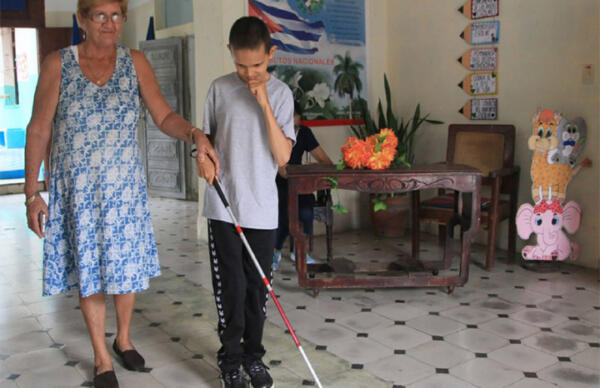
In the face of any adversity, the “Miguel Ángel Echemendía Ramírez” always stands as a great family in which parents play an essential role; perhaps that is why Anabel Viamontes arrived at age 19 to begin her working life and dreams of retiring here, why nearly twenty workers—such as Iraida Díaz—returned after retiring, or why Darío’s “Bienn!” is an achievement celebrated collectively.