International project provides solutions for Cuban aquaculture
The international project “Increasing Productivity and Efficiency in the Agro-industrial Processing of Food in Cuba,” known as IPEPAC, marks a milestone in the development of sustainable solutions for the aquaculture sector in the nation.
Here, one of the biggest challenges for this sector has been the lack of local raw materials for fish feed, and this initiative provides solutions through an innovative technology that transforms fish waste into high-quality feed, contributing to aquaculture health and environmental protection.
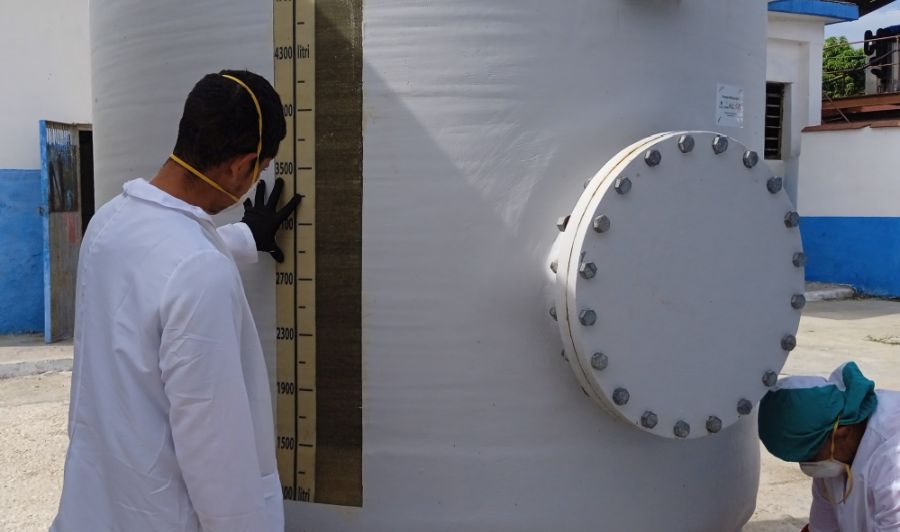
Yoandi Rodríguez Panizo, director of Indupir Sancti Spiritus, provided details to the press about this project, which began here in 2023. “The Indupir UEB (Basic Business Unit) has a silage feed plant that collects the waste from the catch, grinds it, mixes it with a chemical product, and preserves it in tanks for 72 hours. This silage feed can be used for pigs as well as any other animal.” After that silage is made, a portion of it is taken and sent to the dry feed plant located at the dam. That dry feed plant has a mill and a pelletizer.
The silage obtained from fish waste is mixed with an extender, dried to dehydrate it, and then used to produce feed for the development of fry or semi-intensive farmed species such as catfish.
To date, approximately 800 tons of this feed have been produced. This feed replaces imports, closes a production cycle, provides a sustainable nutritional supplement, and makes better use of protein levels with improved absorption and digestion for the fish.
“Currently, it doesn’t meet the demand because the need for intensive farming here in Sancti Spíritus is around 2,500 tons of feed. But we are already seeing progress, at least enough to maintain the breeding stock. This project, sponsored by the Italian Development Agency, was initially approved only in Sancti Spíritus. However, the business group is already interested in expanding it.”
The IPEPAC International Project strengthens local technical capacities through multidisciplinary assistance in agro-industrial design and sustainable aquaculture, in addition to making efficient use of water resources in Sancti Spíritus, with attention to the growing demand for healthy and sustainable animal protein in the territory.