When science breaks out of its shell (+ Photos)
The house seems too small to contain such determination.
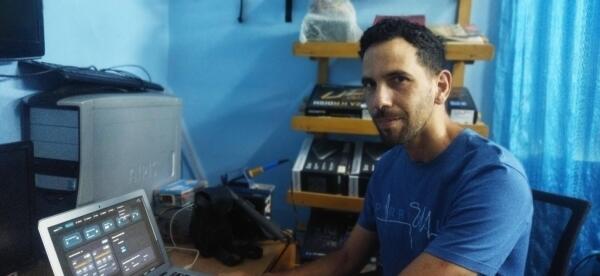
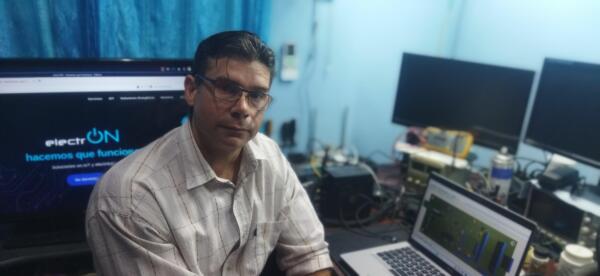
From the outside, no one would imagine that behind those unassuming walls on Ampliación Brigadier Reeves Street in the city of Sancti Spíritus lies one of the most unique technological ventures currently taking root in central Cuba.
There are no modern science parks or million-dollar budgets. There are tools scattered on a table, open computers, carefully organized electronic components, and people determined to demonstrate that, even in difficult times, it is possible to build a future.
The idea was much more ambitious: to create its own technology capable of helping poultry development, replacing imports, reducing costs and contributing to food sovereignty in a country where producing food has become one of the most urgent challenges.
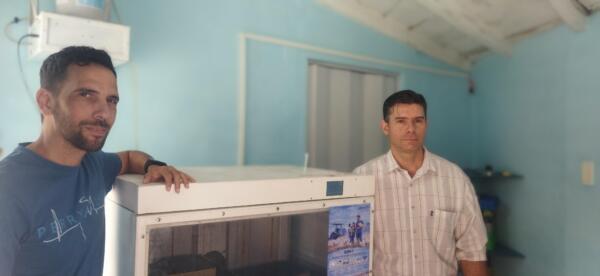
“We wanted to do something useful, something that would benefit the country, benefit many people,” summarizes Aslian Rodríguez Caballero, a Telecommunications and Electronics Engineer and the project’s main manager.
So they began their search.
They looked for sectors where technology could generate real impact. They looked for areas where knowledge accumulated over years could be transformed into a concrete solution. They looked for a problem whose solution depended not only on money, but also on talent and persistence. And they looked toward poultry farming.
What they found was a huge void.
THE INCUBATION BOTTLENECK
In terms of production, there is one particularly critical point: incubation.
This is where almost everything is determined: the quality of hatching, the birds’ vitality, subsequent performance, and the speed at which a poultry flock can grow. And also the losses.
Aslian Rodríguez and the rest of the team quickly realized that many small and medium-sized producers could not access modern industrial incubators due to their extremely high costs. On the international market, a medium-capacity automatic system can easily exceed $3,000 or $4,000, while other industrial equipment surpasses $10,000, not including import costs, maintenance, or spare parts.
Given Cuba’s economic reality, such figures make any attempt at technological modernization a nearly unattainable goal. “We set out to build equipment comparable to top-tier incubators, but one that could be manufactured here and at a reasonable cost,” the engineer explains.
The idea seemed too ambitious for the location where it would begin development. But they persevered.
SCIENCE AMID BLACKOUTS AND EARLY MORNINGS
Nothing happened overnight. Behind the incubator lie almost three years of research, scientific readings, testing, calculations, and countless early mornings. The project began to grow in parallel with two academic pursuits: a master’s degree in Automation and Computer Systems pursued by Aslian Rodríguez at the Marta Abreu Central University of Las Villas, and another in Applied Informatics undertaken by Ángel Ramón Valdivia Hernández (the project’s software developer) at the José Martí Pérez University of Sancti Spíritus.
The academic community provided scientific and methodological support. “We received a great deal of support from a knowledge standpoint. Both the professors in Santa Clara and those in Sancti Spíritus provided us with scientific guidance and helped us throughout the entire process,” Aslian acknowledges.
Then a crucial decision arose: to invest in open-source hardware and software.
The choice wasn’t solely based on a technological philosophy. It was also a practical necessity. Accessing specialized industrial licenses from Cuba is extremely complex and expensive. That’s why they decided to build their own platform.
They designed the complete electronic circuit. They developed the software from scratch. They created the incubation profiles. They analyzed industrial communication protocols. They studied international scientific literature on temperature, humidity, ventilation, and oxygen and carbon dioxide levels.
Everything began to take shape within that house, which gradually became a makeshift research center. “We financed everything ourselves,” the engineer explains.
The income came from the small computer workshop. Repairing equipment. Installing software. Configuring home networks. Saving little by little to buy materials, sensors, and components.
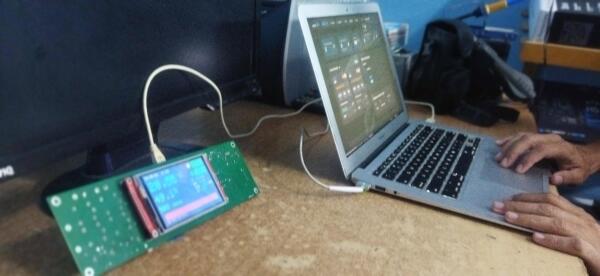
The printed circuit board was designed in Sancti Spíritus and subsequently manufactured in China to high-quality standards. Next came the assembly of the metal structure, also carried out at Aslian’s facility, with the help of mechanical engineers, welders, and technicians involved in the project.
Each piece was adapted until the first functional prototype was formed. When they finally turned on the system, they weren’t just testing an incubator, but also a vision for the country.
THE MACHINE’S BRAIN
The incubator operates using a client-server architecture, where each unit constantly communicates with a central computer. Sensors distributed throughout the incubator record temperature, humidity, ventilation, gas levels, and egg rotation. All this information is transmitted in real time to the computer system.
From there, they can monitor each parameter and modify specific incubation profiles according to the species. “We opted to create our own software because we needed an adaptable system,” Ángel explains.
And adaptable means much more than simply changing numbers on a screen.
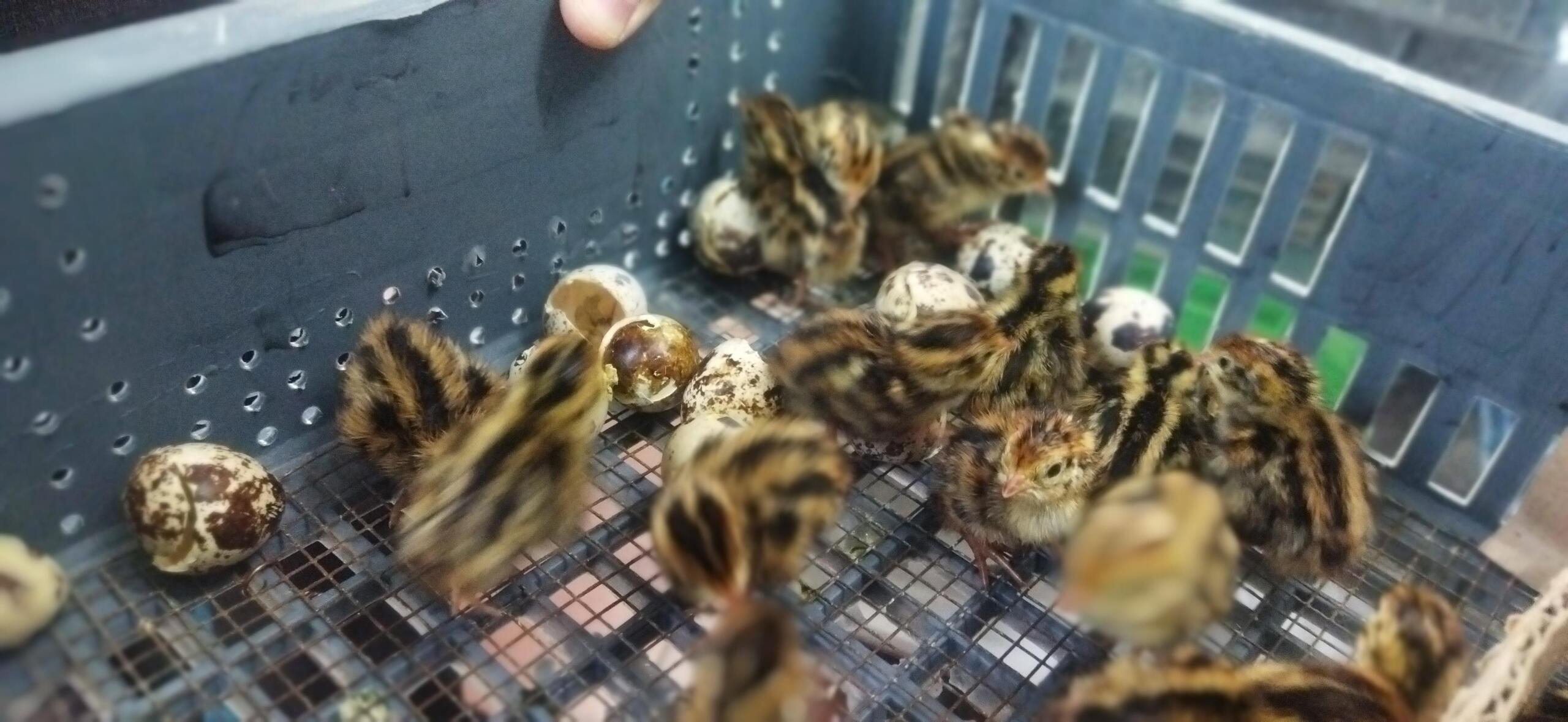
The system allows for the design of different profiles for chickens, quail, turkeys, or other birds. Each species requires particular conditions, and the software automatically controls all the variables involved in the process.
Precise temperature. Precise humidity. Number of egg rotations per hour. Ventilation. Gas exchange. Everything is programmed according to previously studied scientific criteria.
The incubator can even receive remote configurations via a wireless connection. The future goal is to create a platform capable of managing multiple units simultaneously. “We can already say it’s a smart incubator,” says the young software developer. And he doesn’t seem to be exaggerating.