Shut down twice over
The electrical blackout brings with it a telecommunications blackout. Darkness, silence, and disconnection all take hold in tandem.
The causes? They are all too well known and have been explained in numerous forums. Although efforts are made to maintain connectivity—across landlines, mobile networks, the internet, and other services—it is impossible without electricity to keep the system that routes traffic throughout the country up and running. Furthermore, due to the intensification of the absurd U.S. policy against Cuba, fuel supplies arriving this year have been meager—mere drops in the ocean for the nation’s many urgent needs.
Consequently, the situation is the same whether in the heart of the provincial capital or in the most isolated community of Sancti Spíritus. No matter how hard one tries to “catch” a signal, true dead zones emerge whenever the switching centers, cabinets, and base stations shut down.
This is particularly significant given the ever-expanding reach of mobile telephony. Over the last five years, the user base here has grown by some 80,000, bringing the total number of mobile lines in the province to around 340,000.
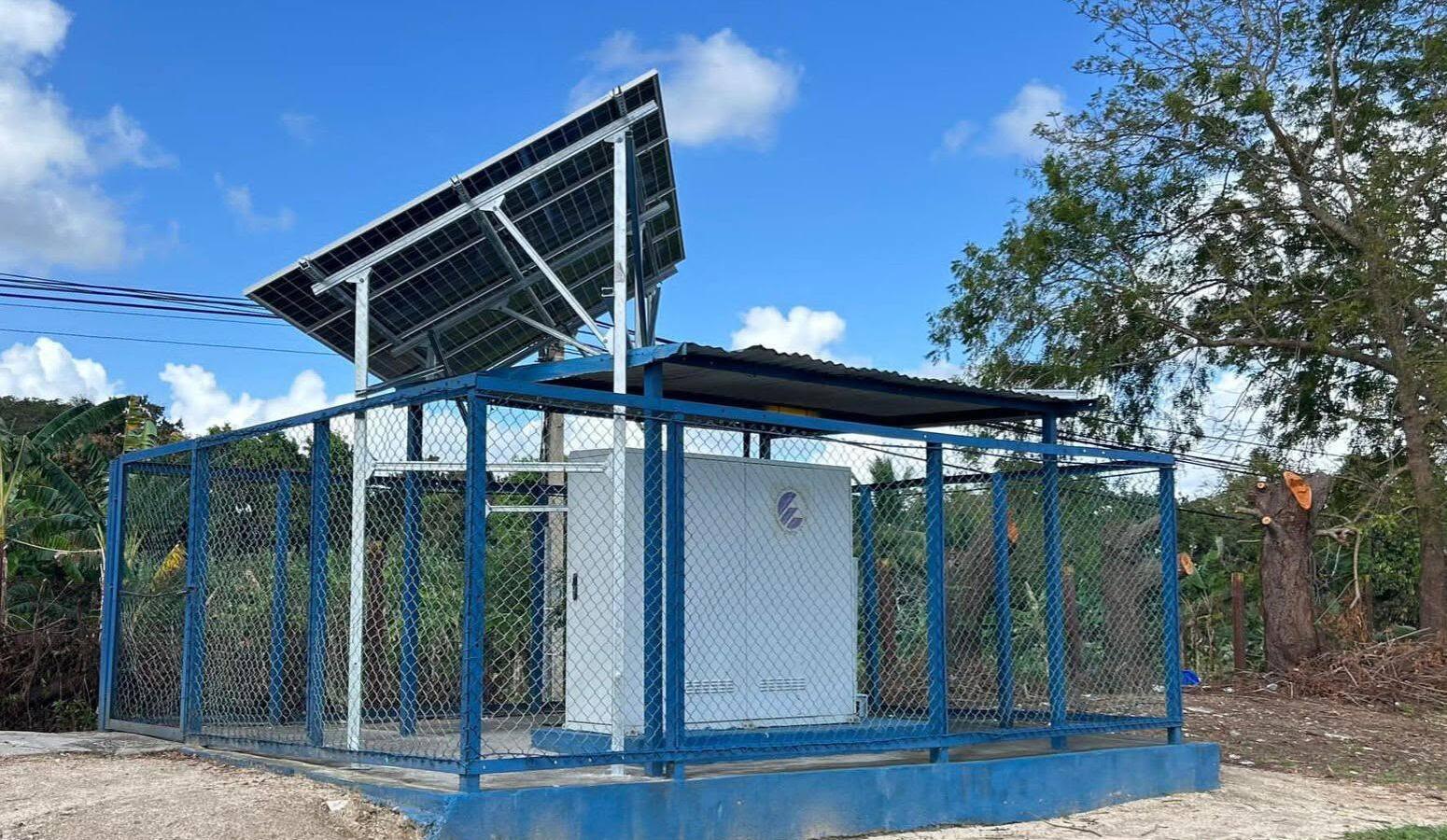
There was hope for some relief with the 2026 announcement regarding the installation of ten 2-kilowatt (kW) solar photovoltaic systems—deployed across neighborhoods and communities to power the cabinets supporting landline and *Nauta Hogar* (home internet) services. And indeed, residents in areas like Olivos II, in the city of Yayabo, are able to maintain communications as long as there is sufficient solar power. However, others—such as the residents of Olivos I—have enjoyed this benefit only briefly.
Technology with a 5 kW battery storage capacity is not designed for extended periods of use, but rather to provide backup during short intervals when the electrical grid fails. Therefore, it is not a solution while the country remains essentially without power.
However, the use of renewable energy does offer some relief. Consequently, efforts are underway to acquire technology with a capacity of 20 kW or more to support the operation of centers located in municipal seats. Relying solely on this source would not guarantee 24-hour service, but it would represent significant savings of precious fuel.
While no one is immune to the loss of communication, some municipalities in the province are at a disadvantage. Only the generator sets supporting telecommunications services in Sancti Spíritus, Trinidad, and Cabaiguán receive centrally allocated fuel. The rest depend on the meager quotas that reach their local areas to power all their facilities.
As a result, practical measures have been adopted to cope with the crisis. To avoid relying solely on power from the National Electric System—where there is never any certainty as to when it will be available or how long it will last—generators are switched on at set times, usually during the early hours of the day. Thus, provided there is fuel available, communication is maintained during these periods in places like Fomento and Taguasco, even if the internet service is not optimal.
This happens because telecommunications rely on a vast interconnected network—functioning, in a sense, like a domino effect. Even if a base station is powered on, the service will fail if the other intermediate network components are not.
It is undoubtedly a highly complex scenario that has, once again, sparked homegrown displays of resilience, solidarity, and collective spirit. Communities like Santa Lucía and Zaza del Medio—driven by grassroots effort and contributions from those with greater financial means, both at home and abroad—have managed to install photovoltaic panels at their base stations. These are vital partnerships aimed at maintaining an essential service under extraordinary conditions.
The reality is that there is no shortage of examples illustrating the negative impact of being cut off from communication—especially when a human life hangs on a single call. Even with mobile phones operating on 2G networks, it is sometimes impossible to hear or be heard; at times, so many base stations go offline simultaneously that severe congestion occurs, causing communications to fail or slow to a crawl due to weak or nonexistent coverage.
Compounding this situation is the deterioration of equipment that is rapidly modernizing worldwide but remains unaffordable due to high international market costs.
Ultimately, as long as electrical service disruptions persist, telecommunications will remain in a precarious state—hanging by a thread—until the day restoration becomes impossible. It is a network that, however much Cuban ingenuity props it up, fundamentally requires energy. Unless there is a complete turnaround in the current situation, this could well become a chronicle of a death foretold.