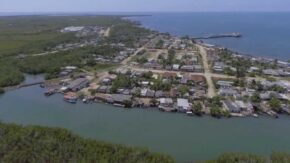
Sancti Spíritus with a new energy map (+ photos)
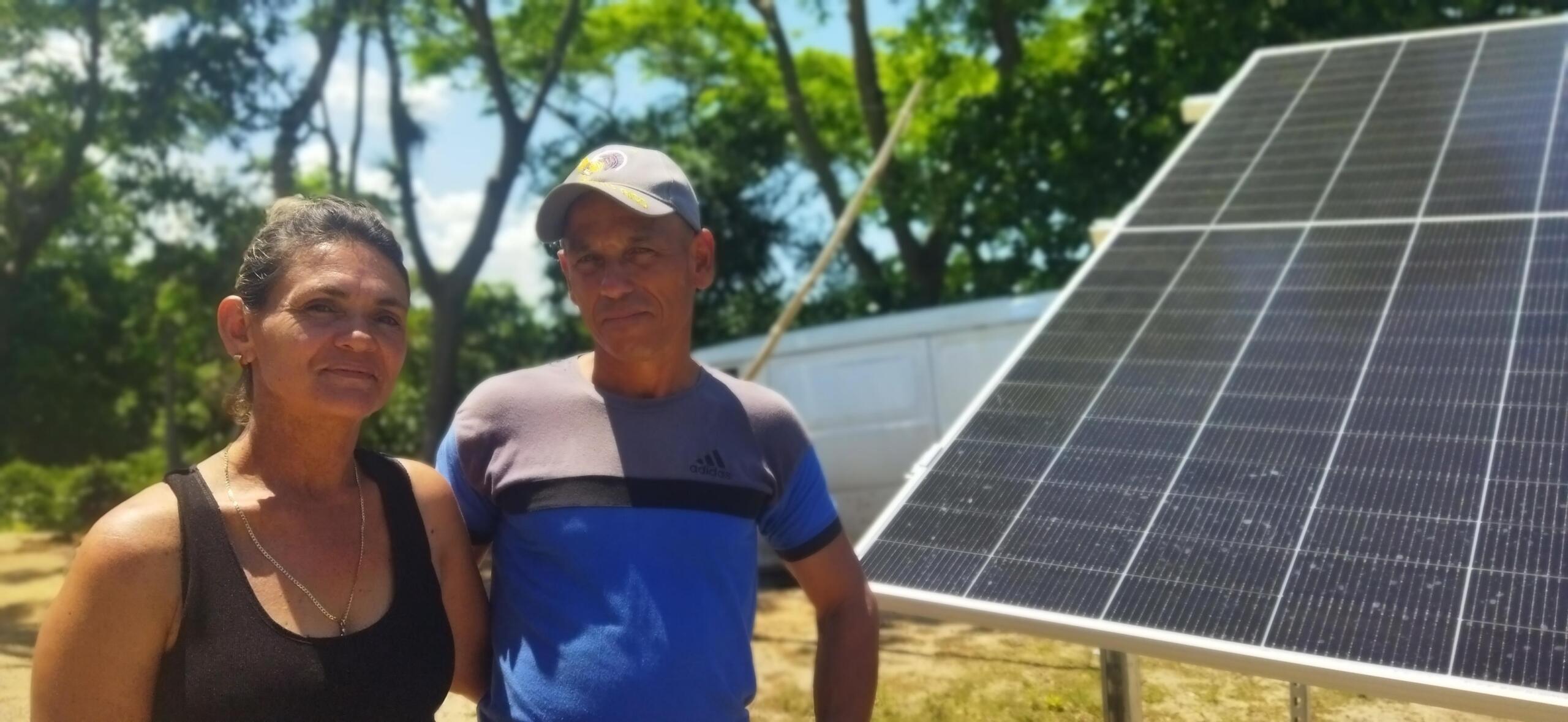
Some maps are created to show roads, municipalities, or geographical features. The map of Sancti Spíritus currently being updated by specialists from the National Office for the Control of Rational Energy Use (ONURE) is different in nature: it tracks where the way electricity is produced, stored, and used is beginning to change.
It is not a finished document, nor is it a static snapshot of the province. It is an inventory that—according to Abel Matos Trimiño, the ONURE director in Sancti Spíritus—is updated almost daily, as every new photovoltaic installation alters the energy landscape.
“Following national directives, we first conducted a survey known as an ‘energy map,'” the director explains. The initiative covered both the state and private sectors, making it possible to identify existing solar installations across various fields—ranging from agriculture and social services to banks, healthcare facilities, and educational institutions.
The latest figures from the agency show 635 state-run entities and 1,735 private ones equipped with solar photovoltaic systems; Matos Trimiño presents these numbers as the results of the survey conducted to date rather than as a definitive, final record.
Added to this total are more than 20,000 homes connected to the National Electric Power System that also feature solar photovoltaic systems, according to the director.
Behind every figure lies a domestic and community reality that extends beyond mere electricity generation. Matos Trimiño explains that many of these families do not use the generated energy solely for their own benefit; they also provide services to neighbors, relatives, or friends—particularly for food preservation using refrigeration equipment. Thus, a solar panel installed on a home begins to transform the immediate surroundings as well.
ONURE—established as the national regulatory authority under the Ministry of Energy and Mines—includes energy efficiency and renewable energy sources within its regulatory scope.
THREE YEARS TO CHANGE THE EQUATION
The growth of these installations also takes place within a regulatory framework that mandates viewing renewable energy not as a secondary alternative, but as an integral part of planning for new investments.
Decree 110 of 2024, published in the Official Gazette as “Regulations for the Control and Efficient Use of Energy Carriers and Renewable Energy Sources,” establishes rules for the control and efficient use of energy carriers and renewable sources—applicable both when the National Electric Power System is stable and during contingency situations.
Among other requirements, the regulation stipulates that new investments classified as high-consumption projects must ensure that 50 percent of the electricity consumed during peak daytime hours comes from renewable sources. For high-consumption entities already in operation at the time the decree was published, a period of up to three years was set to achieve this goal.
In Sancti Spíritus, Matos Trimiño explains, this directive translates into a regional policy aiming for newly emerging entities to progressively incorporate renewable energy sources, and for new investments planned for 2026 to be conceived with a different energy approach from the outset. “Anything created today must include a solar photovoltaic system,” he maintains.
This statement encapsulates a transformation that goes beyond merely installing rooftop panels. The initiative is beginning to shape how investments are conceived from the very start: considering what they consume, how they can generate some of their own required energy, and what infrastructure is needed to operate when the electrical grid is under the most strain.
FROM PANEL TO STEERING WHEEL
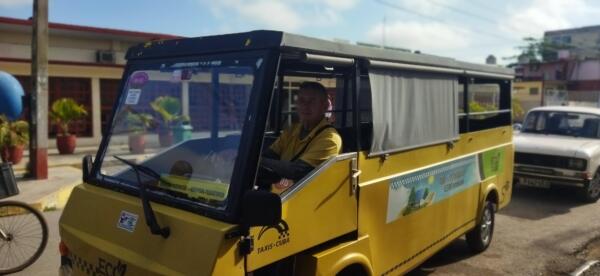
A new coordinate is emerging on this transforming map: electric mobility.
Sancti Spíritus already has “ecomobiles” operating in the provincial capital, as well as in Trinidad, Cabaiguán, and Yaguajay; in September, the expansion of the service to other municipalities was announced, utilizing a new batch of electric vehicles assembled within the province itself.
However, the growth of the fleet raises a question that seems simple but proves to be decisive: where do they charge?
Matos Trimiño identifies this as one of the province’s key priorities. The goal is to increase the number of “solineras”—charging stations powered by solar photovoltaics—so that electric vehicles can access electricity without relying solely on the national grid.
Experience has already demonstrated the link between mobility and energy. According to the official, on certain days, ecomobiles must halt service around 1:00 or 2:00 p.m. because their available charge runs out. A solar charging station could change this limitation and, above all, ensure that the growth of electric transport does not simply translate into an additional burden on the grid.
This need is not hypothetical. A specialized publication covering the Sancti Spíritus initiative had already noted that the ecomobiles were initially charged via the national grid and that the energy transition project specifically included the addition of solar charging stations to utilize photovoltaic energy.
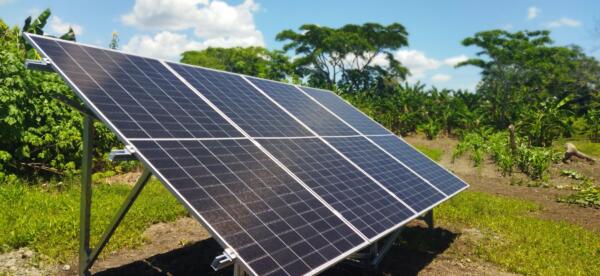
The transformation described by the executive is not limited to large-scale facilities. According to Matos Trimiño, work is underway at various state and private entities that already have photovoltaic systems to incorporate charging points for the benefit of the local community. Examples include the provincial and municipal electric utility companies and the Sergio Soto refinery in Cabaiguán.
In every instance, the focus is not solely on charging vehicles; the initiative also includes stations designed for charging mobile phones, cooking appliances, and other everyday devices.
This represents a different way of viewing an energy installation: the solar system ceases to be merely an internal solution for a company and can also become a resource for those living nearby.
The executive also discusses extending the use of photovoltaic energy to outdoor lighting, particularly in locations where it can simultaneously benefit the entity and the surrounding population.
In this way, the energy landscape is beginning to feature small “islands” of generation and services that can prove vital during power outages.
HEALTHCARE: FROM CLINICS TO AMBULANCES
If there is one sector where energy autonomy takes on particular significance, it is healthcare.
Matos Trimiño lists the installation of new solar systems in polyclinics, day-care centers for the elderly, nursing homes, and local medical offices among the priorities. He also mentions plans to extend this to blood banks and special education schools.
The province, he notes, already has photovoltaic installations—often with a capacity of around two kilowatts—which are sufficient to back up basic services but still inadequate to meet an institution’s total energy demand.
The outlook, therefore, is to increase capacity. “We have plans to introduce a fleet of electric ambulances in the future,” the director reveals.
He offers neither a rollout date nor a specific figure, meaning this is a projection rather than an immediate reality. However, their inclusion in the energy roadmap reveals the province’s intended direction: moving not only toward transport that is less dependent on fossil fuels but also toward electric vehicles directly linked to essential services.
Sancti Spíritus’s recent experience using electric vehicles to transport hemodialysis patients already serves as a precedent for this transition.
A MAP THAT IS STILL INCOMPLETE
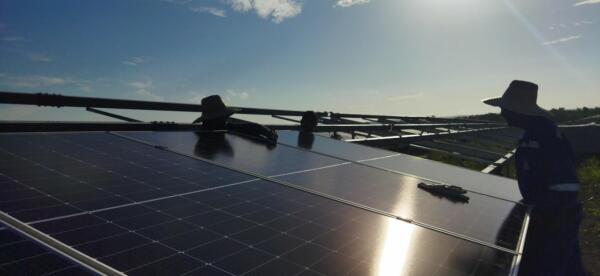
Perhaps the most revealing image from the entire conversation with Matos Trimiño lies not in a figure, but in his insistence that the energy map is constantly shifting. “We update it every day,” he states.
The reason is simple: new players emerge, solar systems are integrated, charging stations are planned, and new needs arise. What appears today as a localized solution could tomorrow become part of a broader network.
The challenge lies in ensuring these pieces do not advance in isolation. A solar panel without storage can offset specific consumption needs but cannot meet an institution’s entire demand on its own. An electric vehicle reduces fuel dependency but requires charging infrastructure. A solar-powered charging station can relieve pressure on the grid but requires photovoltaic generation and proper planning. And a new investment can incorporate efficient technologies from the design stage, but those decisions must be part of the project from the very beginning.
That is why the map described by ONURE is not merely an inventory of panels and vehicles. It is, in essence, a snapshot of the transition toward a different relationship with energy.
In a province where blackouts have turned electricity into a daily concern, this transition takes on a practical dimension: generating a portion of energy where it is consumed, harnessing the sun to power vehicles, bringing renewable generation to essential services, and placing charging points closer to communities.
“The fundamental goal,” Matos Trimiño summarizes, is “to reduce blackout hours and extend electricity service to more hours across the entire province.”
The map will continue to change. And every new panel, every charging station, and every electric vehicle added will contribute a new coordinate to that transformation.