Giant African snail, a latent danger
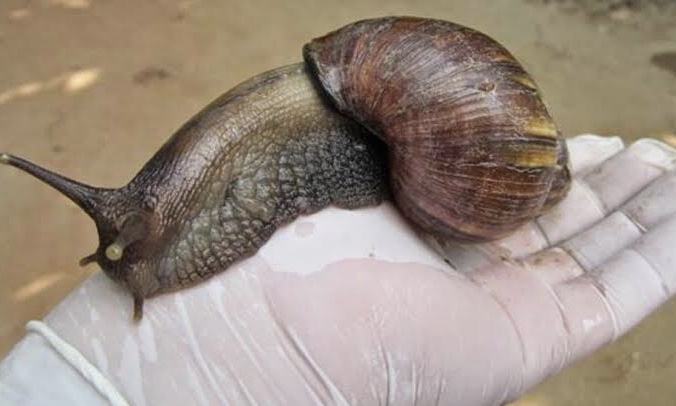
The giant African snail (Achatina fulica), accidentally introduced to Cuba decades ago, has become a recurring problem. After initial control campaigns that managed to reduce its presence, the lack of continuity in these efforts allowed the species to multiply again. By 2025, its spread had reached alarming levels in the eastern and central parts of the country, with reports of colonies in numerous municipalities.
This mollusk is considered by the International Union for Conservation of Nature (IUCN) to be one of the 100 most harmful invasive species in the world, not only because of its impact on human health, but also because of the damage it causes to agriculture and how much it disrupts the harmonious development of ecosystems.
According to experts, the giant African snail can transmit parasites such as Angiostrongylus cantonensis, which causes eosinophilic meningitis; it also feeds on more than 200 plant species, thus affecting economically important crops; it competes with native species and alters local ecosystems.