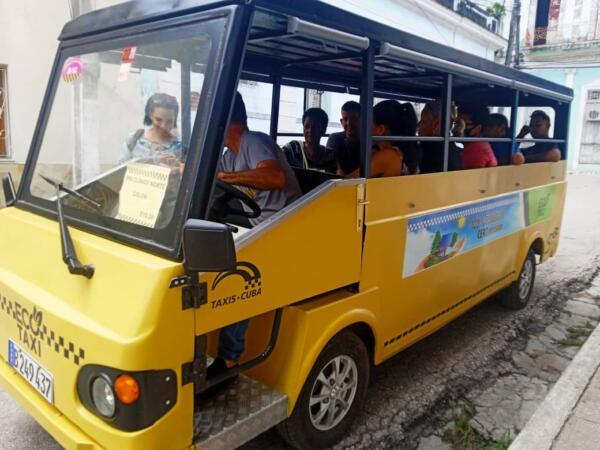
Eco-vehicles: innovation on wheels with mid-range batteries
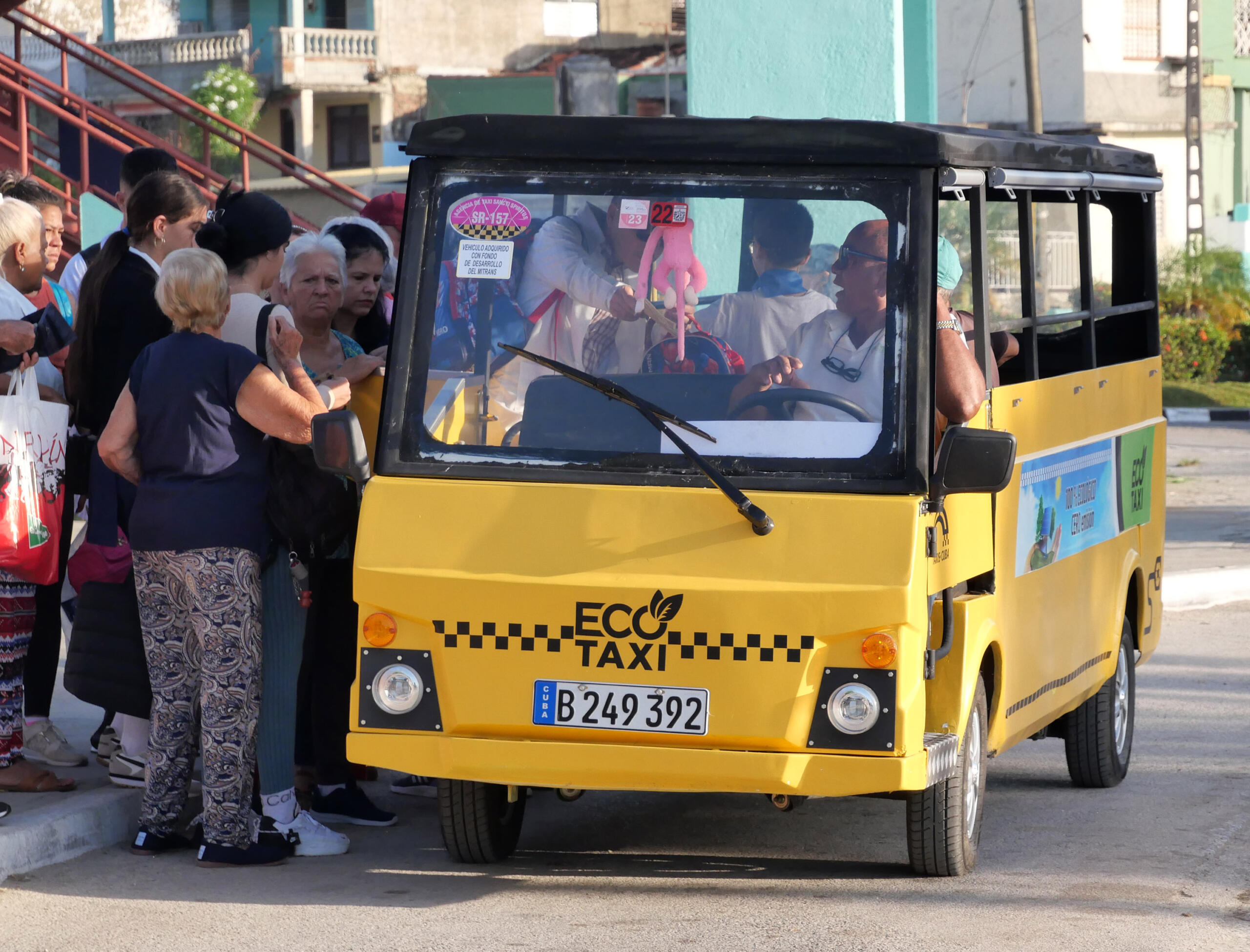
Sancti Spíritus has earned the title of “capital of eco-vehicles” since these electric minibuses were first introduced in the provincial capital and, subsequently, in municipalities such as Trinidad, Cabaiguán, Yaguajay, Fomento, Taguasco, and Jatibonico.
Currently, 61 of these yellow vehicles are available in the province, operating various urban routes at a fare of 10 Cuban pesos per trip—an option considered affordable compared to private transport.
However, this innovation on wheels faces a critical challenge: vehicle charging.
Under current conditions, there are no dedicated charging stations or solar-powered charging points, forcing a reliance on the National Electric System (SEN), which is plagued by prolonged blackouts and restricted operating hours.
Drivers have sought alternatives to keep the vehicles running but acknowledge that charging times are insufficient to maintain the service frequency demanded by the public.
This raises a key question: can this truly be considered clean, sustainable transport if the energy powering these vehicles comes from an electric system in crisis?
José Lorenzo García, the provincial delegate of the Ministry of Transport in Sancti Spíritus, has reported on the expansion of this fleet and its benefits, though he admits that, given current limitations, the operating range of these eco-vehicles depends entirely on the SEN.
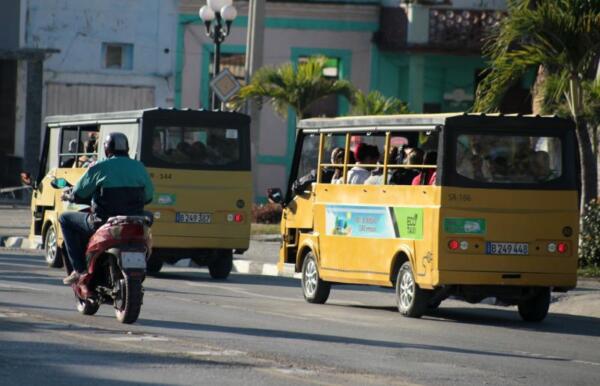
This raises another question: what is the point of increasing the number of vehicles if the infrastructure to support them is not guaranteed?
The recommendations are clear: there is an urgent need to install solar charging stations, plan new routes, and forge local partnerships—involving MSMEs and cooperative projects—to create alternative charging infrastructure.
Electric minibuses have proven to be a viable alternative during challenging times: they ease transportation burdens, cut costs, and benefit the environment through zero emissions.
However, progress is not moving at the same speed across the board.
Dependence on the National Electric System (SEN) and limited coverage in outlying neighborhoods remain obstacles preventing this solution from becoming a structural one.
In a province many now call the “capital of eco-vehicles,” their significance cannot be underestimated. These vehicles—also known as “yellow carts”—offer a bright spot in transportation, yet they still need more power to reach every destination.