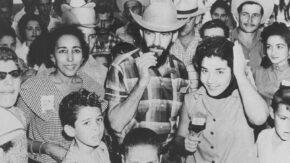
Camilo Cienfuegos: the young man behind the hero
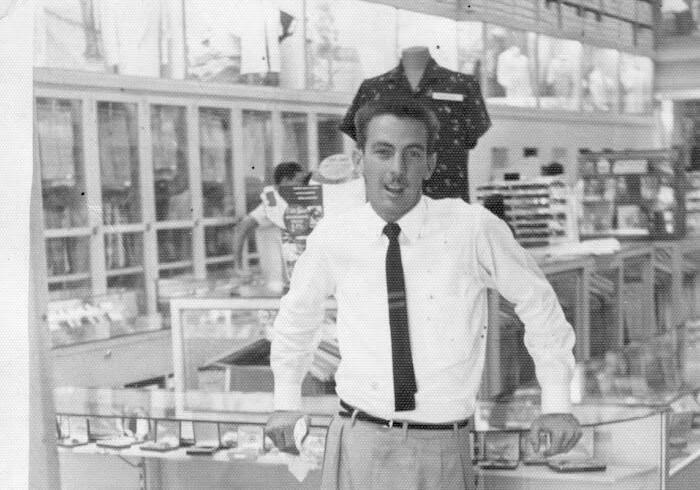
Before the legend of the wide-brimmed hat and the olive-green uniform, Camilo Cienfuegos was a neighborhood boy—a baseball enthusiast, a prankster, and a hard worker. Looking into his youth reveals the human being behind the historical icon and helps one understand how economic hardships and his family upbringing shaped his path. His journey did not begin in the Sierra Maestra, but rather on the streets of Havana, amidst the various jobs he took on to help his family.
He was born on February 6, 1932, in Havana, into a family of Spanish descent with modest means. In this environment, he encountered influences that fostered his sensitivity toward the struggles of others. During the Spanish Civil War—while still a child—he would save a portion of his snack money to contribute to an aid initiative for orphans of that conflict.
He attended school in San Francisco de Paula and later at the Félix Ernesto Alpízar school, where he completed the sixth grade before continuing his education in La Víbora. Sports played a significant role in his life; he played baseball, took part in interschool competitions, and was even a member of a volleyball team.
During his school years, he worked as a tailor’s apprentice at a shop called El Arte. The need to contribute to his family’s livelihood constrained a vocation he had begun to cultivate. His youth was defined by this interplay between a desire to learn and the demands of early employment.
Those who knew him recalled his cheerful disposition and his natural ability to make friends. He enjoyed Cuban music and often liked to joke around, though never with the intent to hurt anyone. This joviality coexisted with a growing political concern, which manifested in 1948 through his participation in protests against an increase in bus fares. His engagement with social struggles began well before he became a combatant and was rooted in the concrete issues of everyday life.
In the early 1950s, he emigrated to the United States in search of better economic opportunities, where he held various jobs. During this period, he contributed to the newspaper *La Voz de Cuba*, using it as a platform to express his opposition to the dictatorship of Fulgencio Batista. Upon returning to the island in 1955, he took part in protests against Batista; in December of that year, he was shot in the leg during a demonstration that was suppressed by the police.
He later returned to the United States, but by then, he was determined to join the struggle. He traveled to Mexico and became part of the *Granma* expedition. When he landed in Cuba on December 2, 1956, he was 24 years old. Thus began the guerrilla phase of young Camilo’s life—a period during which he never lost the spontaneous spirit his friends so fondly remembered.