RAQUIS: Technology from Sancti Spíritus to support decision-making in neurosurgery
The need for specialized scientific information when treating patients with spinal injuries prompted the development of a software tool designed to assist neurosurgery professionals in Cuba.
The tool, called RAQUIS, is a mobile application created by Evelyn Lorenzo Morales—a third-year resident in the specialty at the Camilo Cienfuegos Provincial General Hospital in Sancti Spíritus—in collaboration with her partner, software programmer Yasiel Tamayo Rivera. The project was developed with guidance from Dr. Ariel Álvarez Rodríguez, a senior specialist and head of the department.
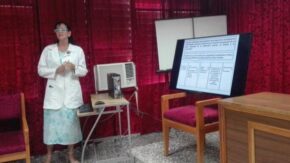
The initiative was unveiled on November 16 as part of the scientific program for the 25th “In the Service of Life” Symposium, which was dedicated specifically to the neurosurgery department of the Sancti Spíritus institution.
“In recent months, we have been encountering many spinal cord injuries, particularly in the thoracolumbar region. It is no secret that we face certain limitations—whether regarding diagnostic imaging resources or the surgical instruments needed to care for these patients,” explained Evelyn.
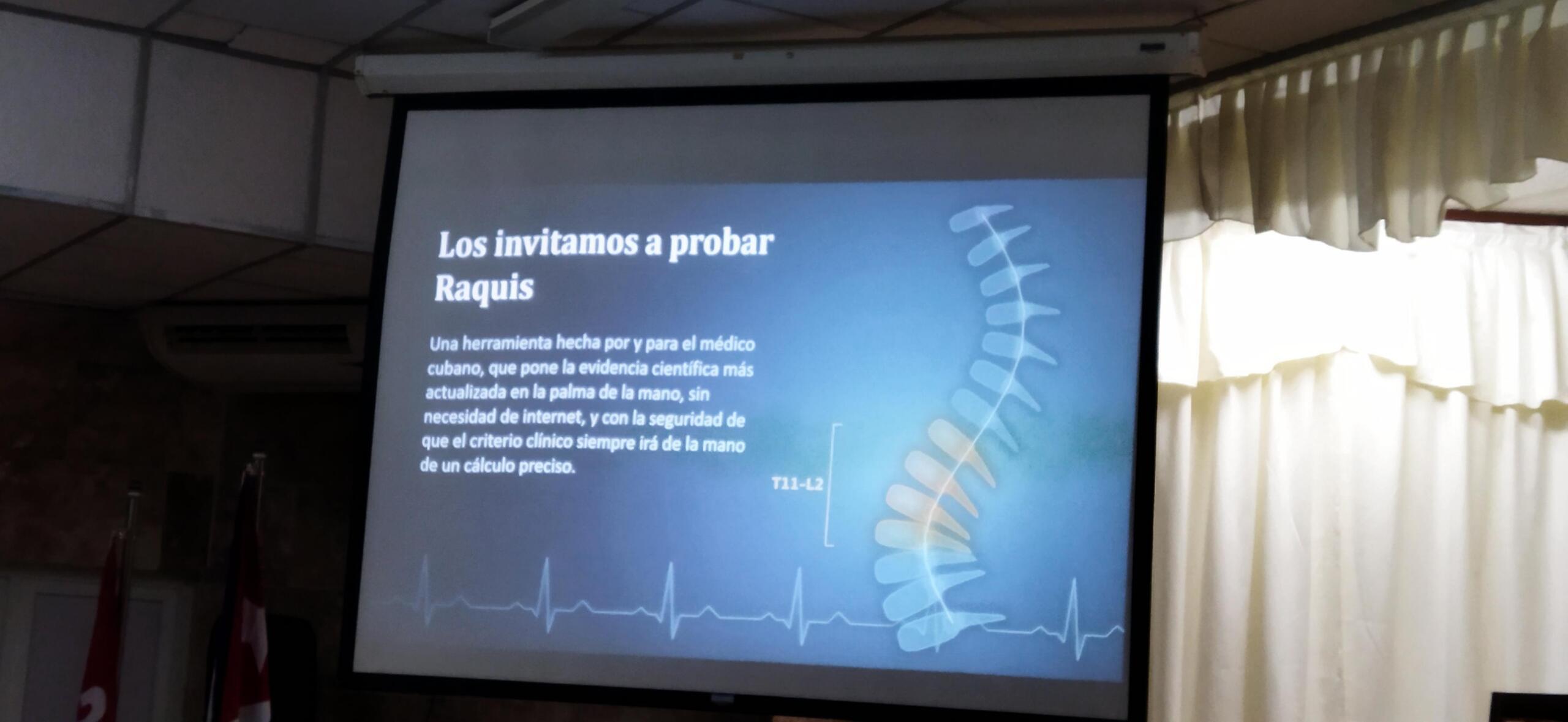
This clinical reality gave rise to the proposal for a tool that would provide medical staff with access to specialized scientific information and enable them to perform calculations quickly, without the need for an internet connection.
CLASSIFICATION OF THORACOLUMBAR TRAUMA
RAQUIS is specifically designed to support the assessment of fractures and other traumatic injuries to the thoracolumbar spine, utilizing the AO Spine classification and scoring system—an international benchmark for evaluating such trauma.
This region encompasses the transition between the thoracic and lumbar spine. The application focuses on the T11, T12, L1, and L2 segments as the anatomical reference points for its scope.
The tool allows for the organization of key variables essential for assessing an injury: the morphology of the vertebral damage, the patient’s neurological status, the integrity of the posterior ligamentous complex, and specific individual factors that may influence the therapeutic approach.
Based on these elements, the application generates a score that helps guide the specialist in determining treatment options, ranging from conservative management to surgical intervention.
“The application categorizes the injury based on its morphology, the extent of spinal damage, the status of any torn or injured ligaments, and the patient’s specific comorbidities. It performs a calculation that assists us in our decision-making,” explained the young neurosurgeon.