Sancti Spíritus Fishing Company Faces New Challenges and Transformations
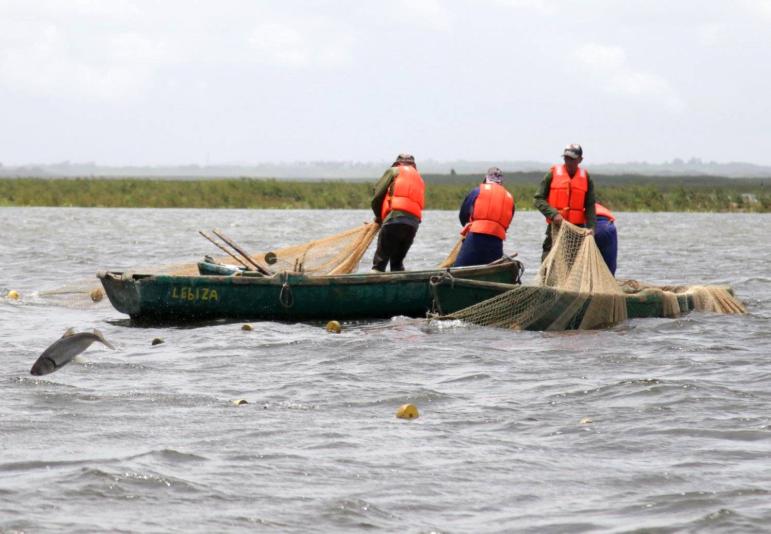
Amid a complex economic landscape, the Sancti Spíritus-based fishing company PESCASPIR faces the challenge of maintaining production and ensuring its products remain available in fish markets.
Its director, Erich Pérez Márquez, explains the reasons behind price increases, adaptation strategies, and the entity’s outlook.
PESCASPIR’s prices have risen in recent weeks. Why is this happening when weight and quality remain unchanged?
“The main factor is fuel. Today, a liter costs between 1,100 and 1,800 pesos, making every product shipment more expensive. Added to this are intermediate services, such as cold storage rentals. A trip that once cost 50,000 pesos can now exceed 600,000. Furthermore, we maintain stable prices for products destined for social consumption—hospitals, daycares, and Family Care Services (SAF)—which forces us to offset those costs through products sold on the open market to the general public.”
The company has introduced electric vehicles. What role do they play in this context?
“They aren’t recent acquisitions, but they have allowed us to keep the headquarters operational and reduce fuel consumption within the provincial capital. We are committed to shifting our energy mix and acquiring new electric vehicles to lower our dependence on foreign currency for fuel purchases.”
What is the current production situation?
“We work with state-owned enterprises and private MSMEs that contribute a portion of the catch. This has allowed us to gradually maintain our product range, although we acknowledge that it does not meet the full demand. We are reorganizing our sales system by classifying fish markets based on whether they sell higher- or lower-cost products; this enables us to serve both low-income sectors and markets that generate the revenue needed for us to restock.”
How many fish markets are there in the provincial capital?
“We currently have five.”
Have any outlets transitioned to non-state management models?
“Not yet, but we are working toward that. We want to turn the fish markets into franchises that allow for wholesale sales and ensure liquidity, while keeping a close watch on prices. The plan is to also bring them to neighborhood markets so that the product reaches consumers at a better price.”
What are the main products currently on offer?
“We produce minced fish, fillets, and carp-based products, as well as seasoned items. We also sell shelf-caught fish through contracts with companies in Caibarién and Matanzas province. Our company focuses exclusively on aquaculture, but we purchase shelf-caught stock to diversify our product range.”
Are there plans to open new retail outlets in Sancti Spíritus?
“We want to redesign our fish markets to offer distinct options—some more upscale and others more affordable—depending on the product type and the population’s purchasing power.”
What is the company’s outlook for the coming months?
“We are renegotiating contracts with MSMEs to secure raw materials and seasonings, the prices of which depend on the dollar’s value on the informal market. We cannot operate at a loss. The challenge lies in maintaining stable and varied product offerings by designing outlets that cater to both low-income customers and those seeking higher-quality products.”
The PESCASPIR fishing company in Sancti Spíritus faces a challenging landscape, where the costs of fuel, raw materials, and financial services dictate the pace of its operations. Nevertheless, the company is committed to reorganizing its sales, diversifying its retail outlets, and maintaining social consumption, all with the aim of ensuring stability and quality for the population.