Cuba’s largest dam in critical condition
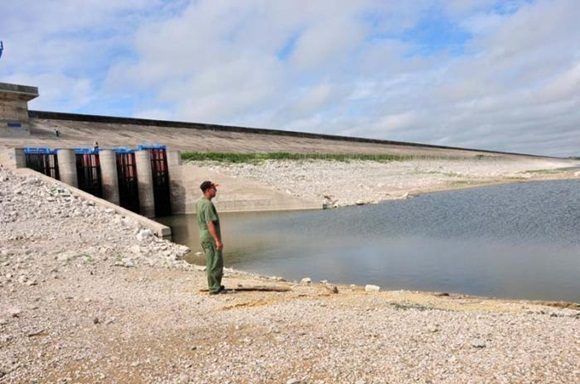
With barely two months remaining in the rainy season, the Zaza Dam—the country’s largest reservoir—is in a critical state.
Dixian Ravelo, the provincial delegate for Water Resources, noted that “the province currently holds 339.683 million cubic meters—representing just 28 percent of total capacity. This figure is heavily influenced by the Zaza reservoir, which is holding only 21 percent of its capacity; the situation at that specific reservoir is very critical.”
The territory’s other reservoirs are in better shape. “The province’s other reservoirs are faring better: Lebrige is at 42 percent, Tuinucú at 99 percent, and Siguaney at 100 percent. This results in an average fill level of 64 percent across the dams that supply the population.”
Zaza’s low water level raises a red flag for rice production. “That reservoir essentially supports the entire local rice-growing system. We are facing an extremely critical situation that requires careful analysis as the wet season draws to a close. We need to assess our available water volume to plan for the upcoming ‘cold season’ crop cycle; if it doesn’t rain, the low volume currently stored in the reservoir will result in a significantly reduced planting area.”
What would happen to the Zaza Dam if water levels dropped near the so-called “dead storage” volume? The Zaza has a dead storage volume of 90 million cubic meters; a pool of water of roughly that size would remain because the water level would no longer be high enough to feed the entire system—neither the canal nor the various irrigation networks. In other words, if the worst-case scenario were to occur, that water would remain trapped within the reservoir, right?
There is a specific reason for the situation at the Zaza. Drought conditions persist in Sancti Spíritus, even in the middle of the rainy season. “The drought continues. In August, rainfall was only 30% of the historical average—just 59.2 millimeters. The municipalities with the highest rainfall were Cabaiguán (42%) and Taguasco (40%), while others saw very low levels, such as Yaguajay at 8 percent. Consequently, the wet season in this territory has been classified as ‘moderately dry’.”